Refining farmer soybean management practices can increase yields across the main producing regions in United States. Your management decisions are more important than you think!
While weather and soil define a huge part of the game, roughly 15% of your soybean seed yield depends exclusively on the decisions you make before the planter ever hits the dirt. It might sound like a small slice, but data from thousands of DONMARIO Multi-Environment Trials across the U.S. show that missing the mark on your variety and planting date combination can cost you between 10 to 12 bushels per acre. Understanding this is critical, as improving these decisions doesn’t require spending an extra dollar on inputs. In the Northern and Central Corn Belt and Mid-South, the choice of your genotype is what will drive the top-end yield. However, in regions like the Dakotas or the East Coast, wisely choosing your maturity group becomes much more critical.
Focus on your planting date and genetics, not just stand counts. As farmers, we often obsess over seeding rates and stand counts. However, a multi-year study conducted by DONMARIO agronomists shows that soybeans planted at the recommended stand density rarely lose significant yield.
The real yield loss comes from planting too late or choosing the wrong genotype and Maturity Group rather than stand density. Understanding which of these factors has the most leverage in your specific region is the most effective way to stop leaving bushels in the field and protect your farm’s bottom line.
Key takeaways:
- Genotype and Maturity group: Choosing the right combination is your first step to success.
- Planting Date: This management practice is critical to have high yielding soybeans.
- Stand Density: The impact is minimal, with differences usually under 4.5 bu/ac.
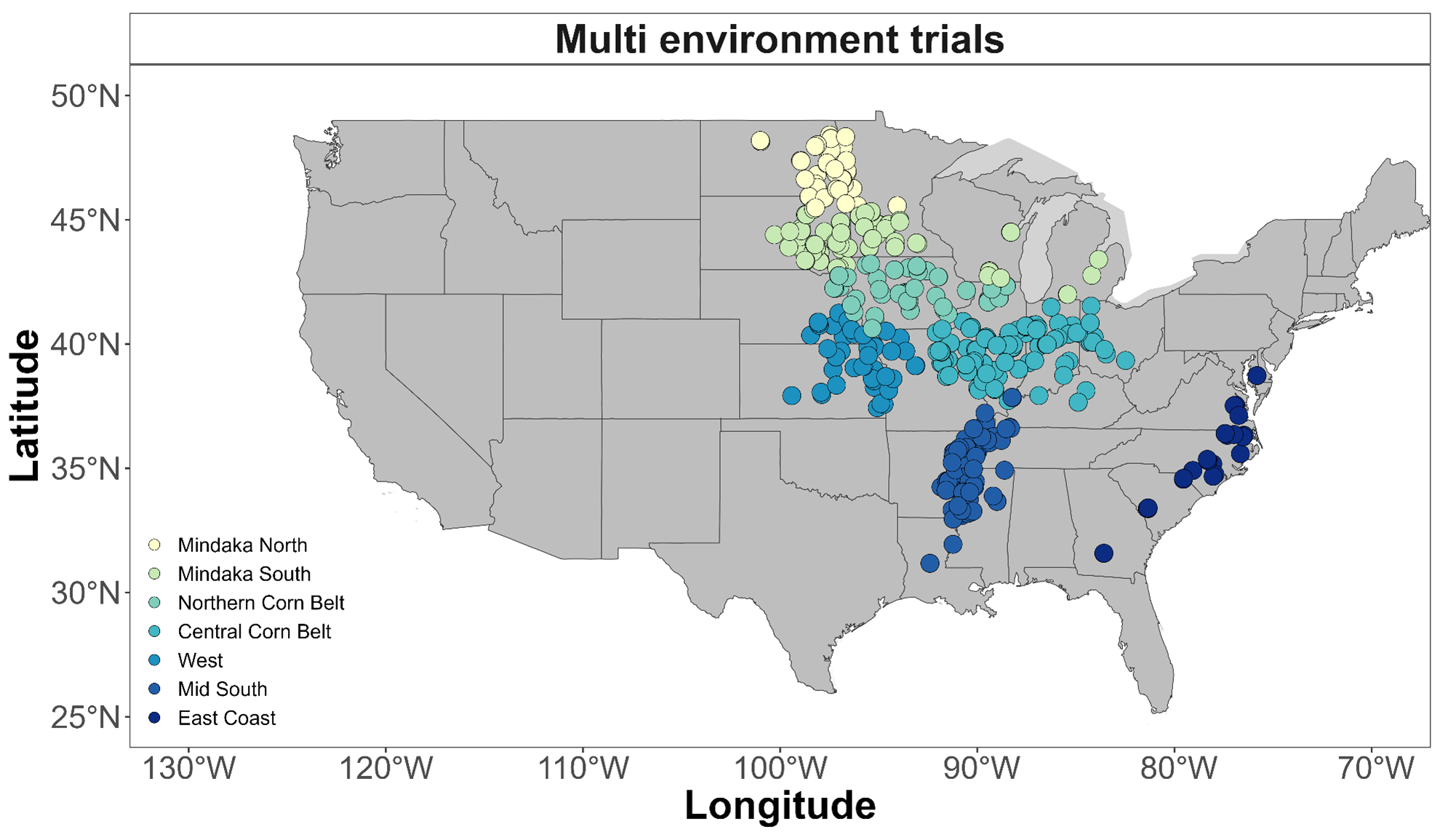
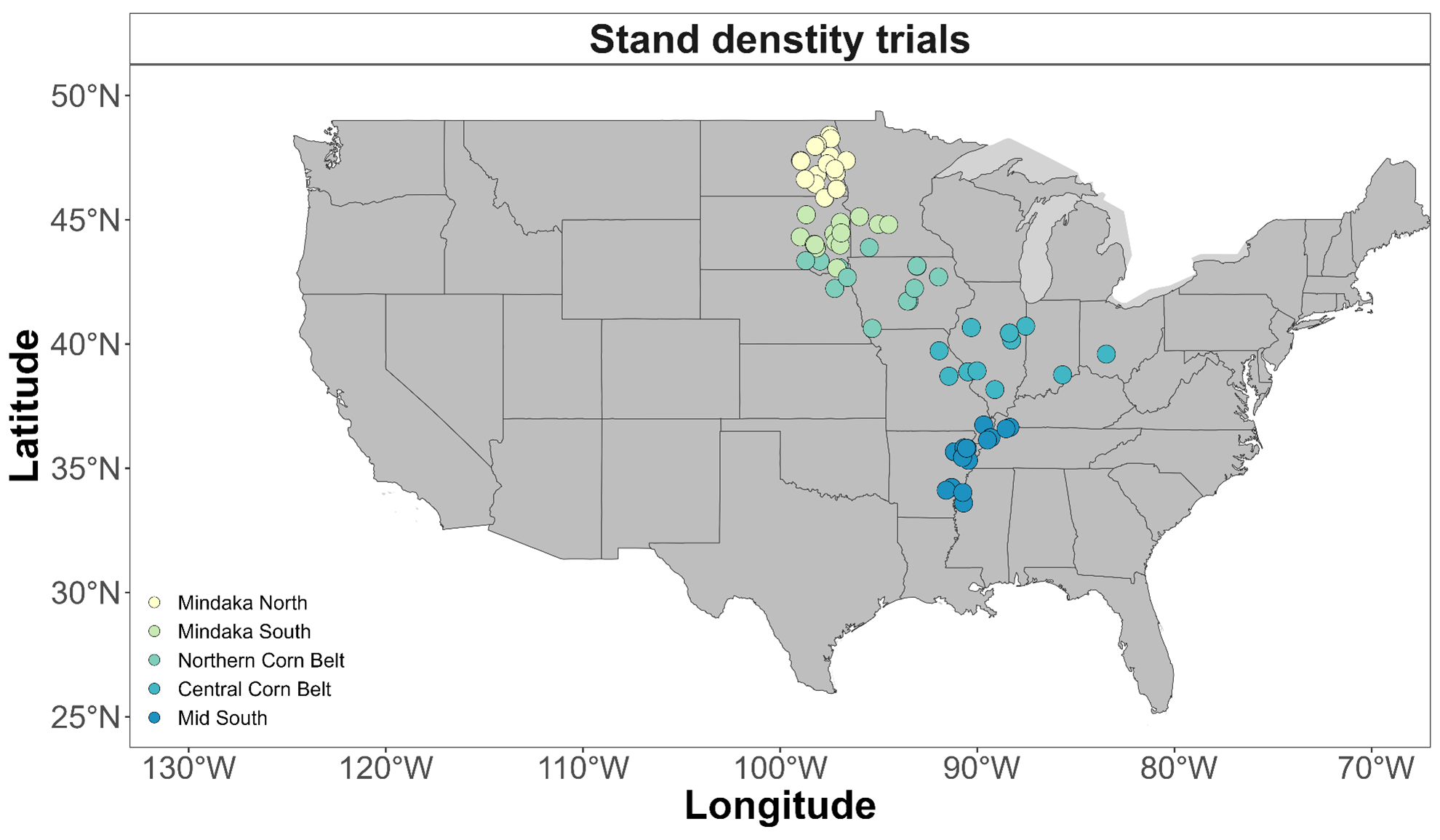
Figure. Geographical locations of the multi-environment and stand density trials of the DONMARIO testing network. Each point represents one trial.