Calonectria ilicicola is a fungal plant pathogen that causes Red Crown Rot (RCR), which was first discovered in the US on peanuts in the 1960s and later infected soybeans in 1972. RCR was first reported in Pike County, Illinois in 2018 and in the surrounding states shortly after. RCR has a very wide host range affecting many plants and can reduce soybean yield by 40-80% depending on severity.
RCR over winters as survival structures called microsclerotia which can survive a minimum of 4 years. Infection often occurs during the seedling stage with symptoms appearing in the reproductive stages. Disease losses are the most severe when infection occurs in the seedling stage. RCR favors soil temperature between 77-86 degrees F. As a result, double crop fields could be more prone to RCR with increased soil temperatures.
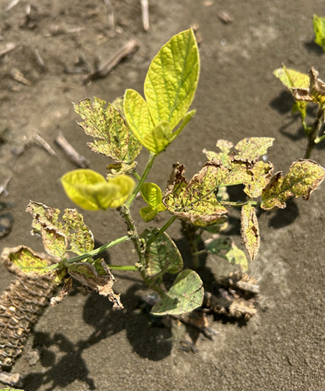
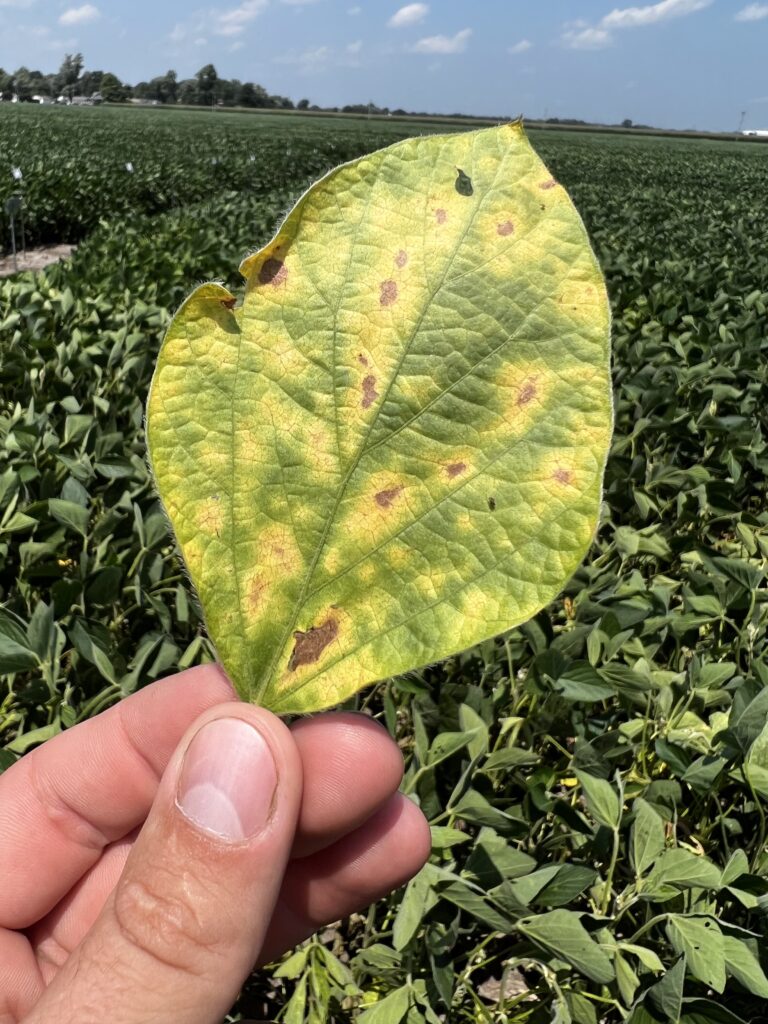
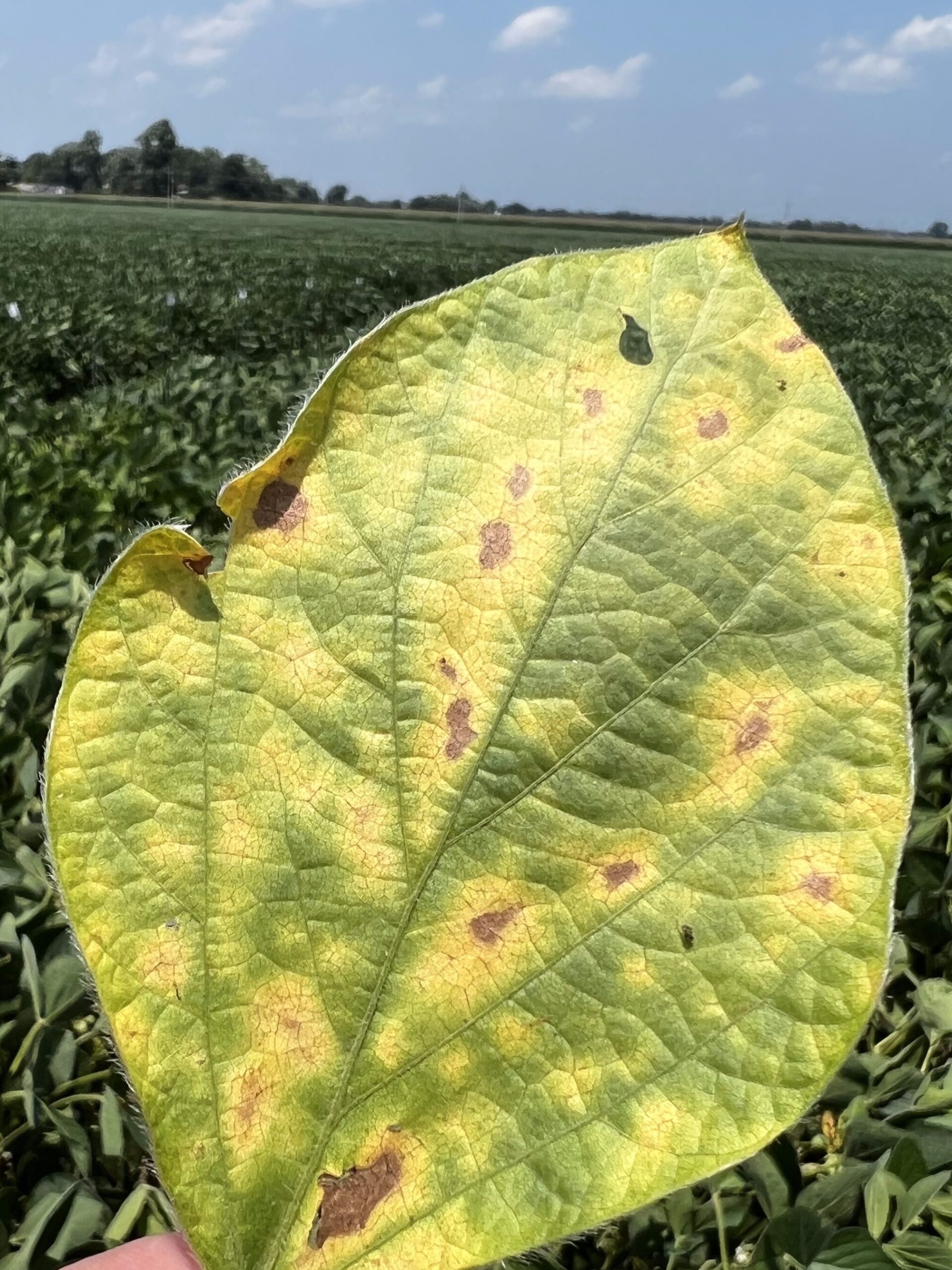
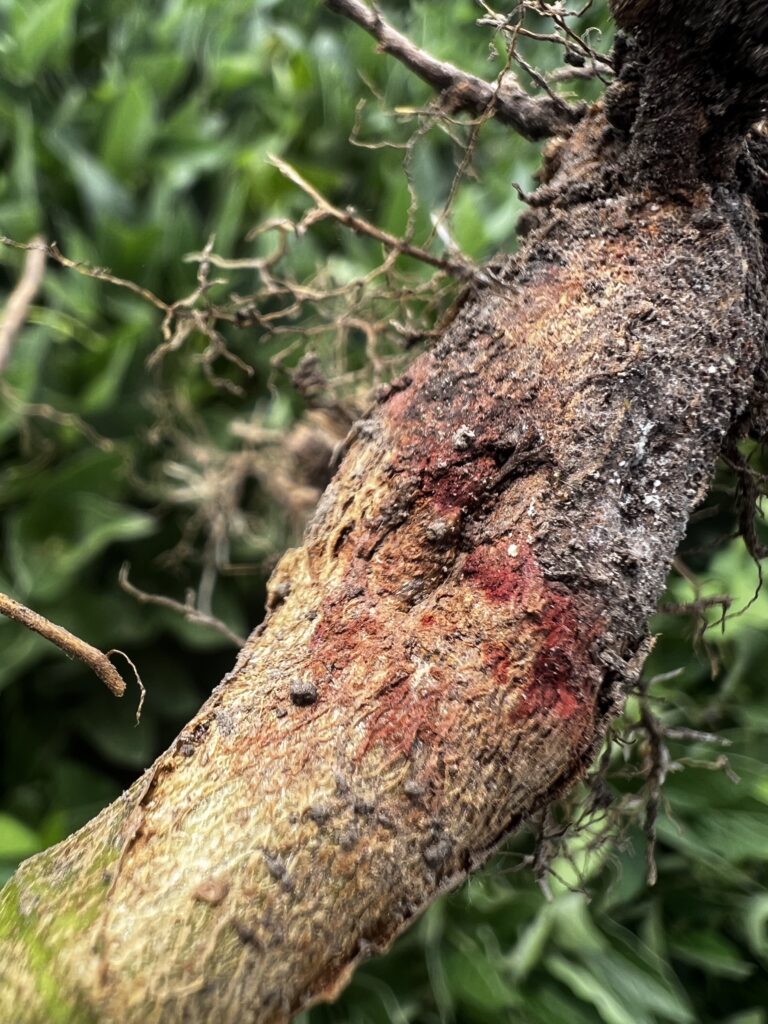
The first symptom is a reddish discoloration of the stem at ground level. A red ring can be seen from stages V2 though R7. Interveinal chlorosis and necrosis symptoms begin to show on the leaves at R1 though R7. It starts with slight cupping and spotting of the leaves to only the veins remaining bright green. The end result is a completely dead plant with brown leaves still attached and rotted roots. From R6-R7 very small reddish-orange spheres called perithecia form on the lower stem near the red ring. If you see these there is no doubt you have RCR.
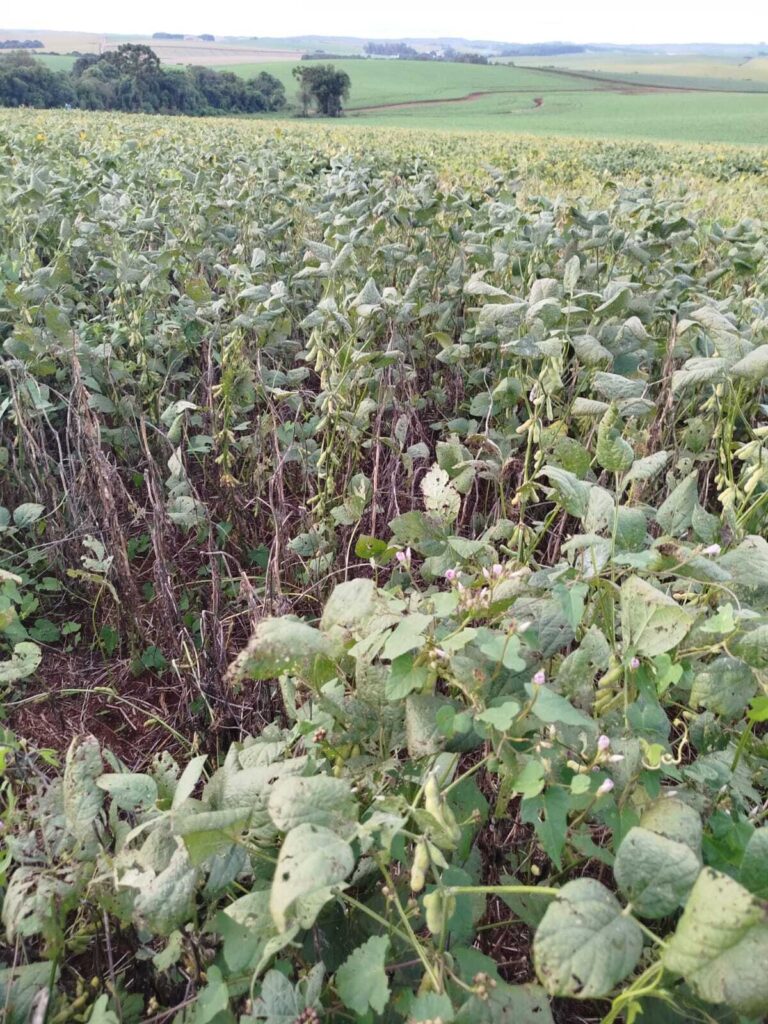
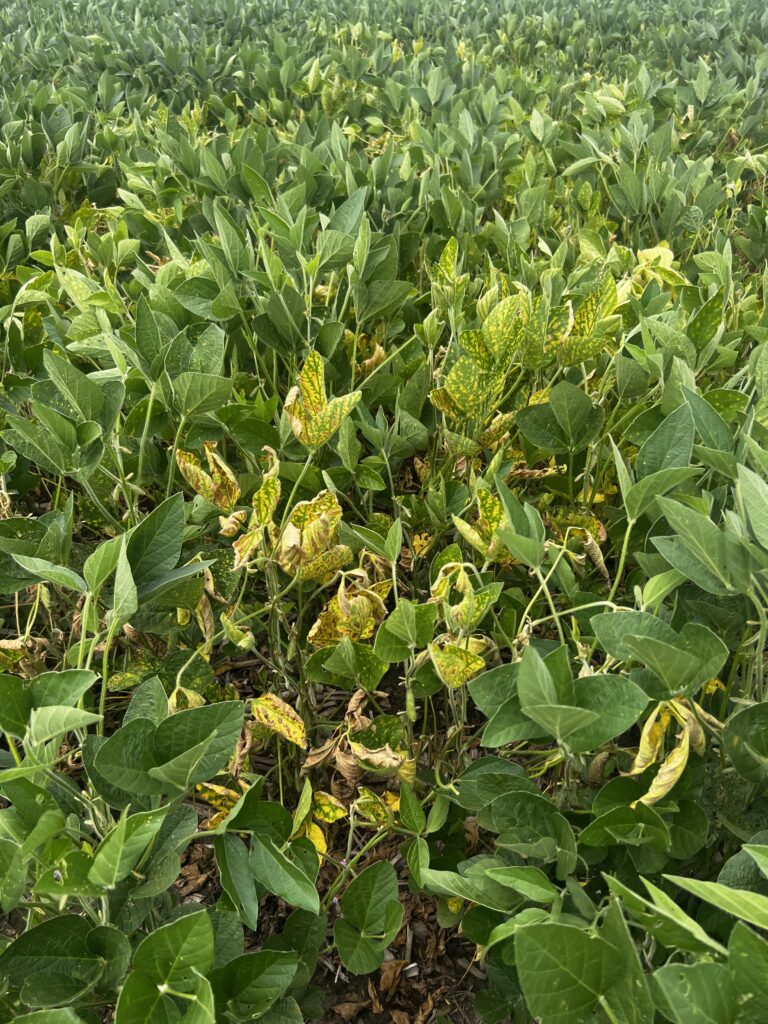
RCR will show up in patches throughout a field that spread larger filling in the gaps as the season continues. Look in low lying waterways, RCR is often spread by soil moved by water. In some cases, you can even see the trail of tillage passes through heavily infected areas. Healthy and diseased plants can be found next to each other. Until R6-R7, RCR could be mistaken for other diseases based on foliar symptoms, such as, sudden death syndrome, brown stem rot, and southern stem canker.
Good management is the best way to prevent or slow the spread of RCR. Breaking its life cycle by rotating with a non-host crop for a few years is often recommended. This is easier done in the south with a greater variety of crops, here the best option is to do corn on corn. RCR is a soil-borne so cleaning equipment thoroughly between fields or working in the infected field last would prevent further spread. Planting into cooler soil temperatures could potentially reduce RCR infection. By the time the soil is warmer the plant could be big enough to reduce infection. Manage other crop stressors and diseases, they can compound the effect of infection. Use a fungicide seed treatment like Saltro with proven efficacy for RCR suppression. There are no current treatments that prevent RCR altogether. The best up and coming way to stop RCR is with a resistant variety. While there are varieties that show less symptoms than others there are no resistant lines on the market today. Many companies are working towards a solution including DONMARIO.
Our breeders and pathologists are closely monitoring the spread of RCR to ensure that resistance screening and localized testing are integrated into our research pipeline. Every DONMARIO variety is developed through years of regional testing, helping growers stay ahead of emerging threats like RCR through better agronomic data, seed treatment compatibility, and variety selection guidance. Through continued collaboration across GDM’s global breeding network and our U.S. Explore plots, we’re advancing solutions that protect yield potential where it matters most—on your acres.